
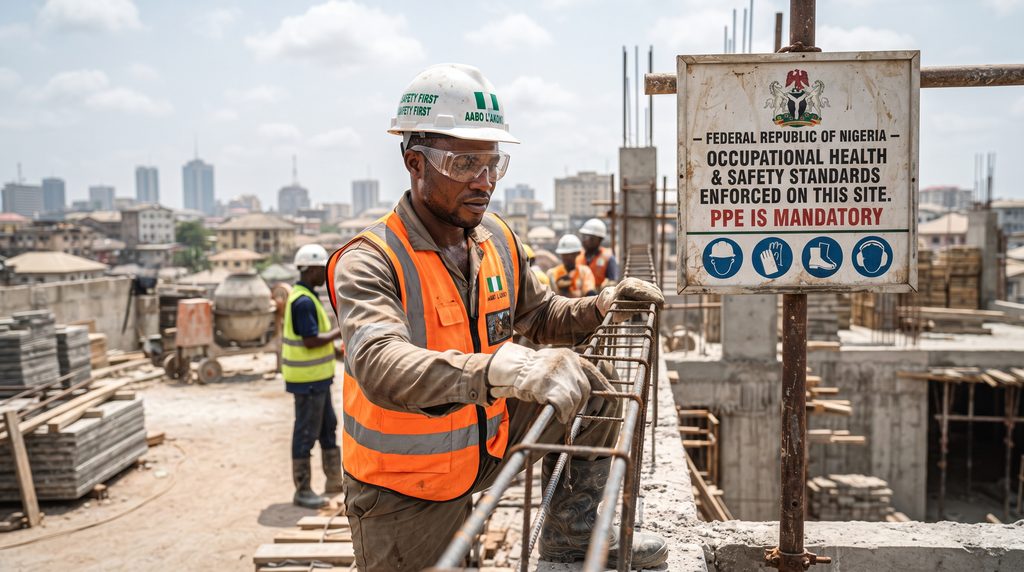
When we talk about national development in Nigeria, our minds often go straight to macroeconomic indicators like oil prices, inflation rates, and GDP growth. Yet, a fundamental pillar of productivity is routinely left out of the conversation: the health, safety, and well-being of the everyday worker. Occupational health—ensuring that people do not get sick or injured because of how or where they work—is an urgent human rights and economic issue in Nigeria today.
The Reality of Nigerian Workplaces
Workplace hazards take many forms across the country, varying wildly depending on the sector. In bustling commercial hubs like Lagos, manufacturing and construction sites expose workers to heavy machinery, deafening noise, poor ventilation, and chemical fumes without adequate protective gear.Meanwhile, in the informal sector—which accounts for an overwhelming 60% of Nigeria’s total workforce—artisans, market traders, and agricultural workers operate with virtually zero formal safety nets or medical insurance.
Even in white-collar and specialized environments, occupational hazards are prevalent. Studies evaluating healthcare workers in northern Nigerian hospitals reveal that biological hazards, such as accidental sharps and needle-stick injuries, affect nearly 48% of staff.High stress levels and musculoskeletal strains from prolonged standing or heavy workloads further compound these risks, showing that health workers who care for the public often neglect their own safety.
Laws on Paper Versus Realities on the Ground
Nigeria is not entirely lacking in legal frameworks. Laws such as the Factories Act (Cap F1, LFN 2004) and the Employees’ Compensation Act are designed to mandate safe working environments and provide compensation for workplace injuries.
However, the practical enforcement of these laws remains deeply suboptimal. Many employers cut corners to maximize profit, treating safety gear like helmets, gloves, and masks as optional expenses rather than mandatory requirements. Furthermore, weak regulatory oversight and outdated penalty structures mean that defaulting organizations face little to no consequence for putting lives at risk. For informal workers, these statutory protections do not apply at all, leaving millions entirely unprotected.
The Path Forward
Improving occupational health in Nigeria requires a deliberate shift in culture and policy. First, the Federal Ministry of Labour and Employment and relevant agencies must scale up factory inspections and tighten enforcement, ensuring that penalties for safety breaches are stiff enough to deter negligence.
Second, organizations must move from a reactive mindset to a proactive safety culture. Providing proper Personal Protective Equipment (PPE), routine medical checkups, and mental health support should be standard practice, not an afterthought. For the massive informal economy, grassroots worker associations and local government initiatives must step in to provide basic safety training and affordable healthcare access.
A productive nation is built on the backs of healthy, secure workers. When Nigeria takes occupational health seriously, it protects its greatest asset: its people.
Leave a Reply